
Understand your condition. Explore your care options. Take the next step with confidence.
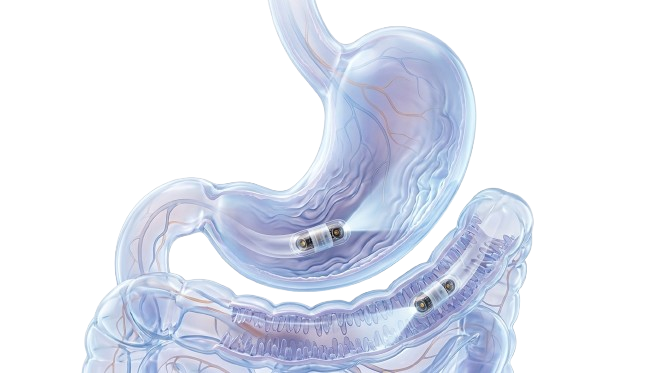
The breath test is another technologically advanced non-invasive way of diagnosing the number of conditions in the human body. Measurement of the number of gases present in our body through breath test help experts conclude a lot about our bodily conditions. The capsule endoscope is a procedure that uses a tiny wireless camera to capture pictures of the digestive tract.
A thoughtful and personalised approach to help you understand your condition and make informed decisions.
A focused discussion about your history, symptoms and concerns.
A plan tailored to your condition, lifestyle and goals.
Continued support throughout your care journey.
From understanding your condition to planning the next steps, we work with you at every stage.
Review your history and concerns.
Discuss appropriate investigations.
Agree on your next steps together.
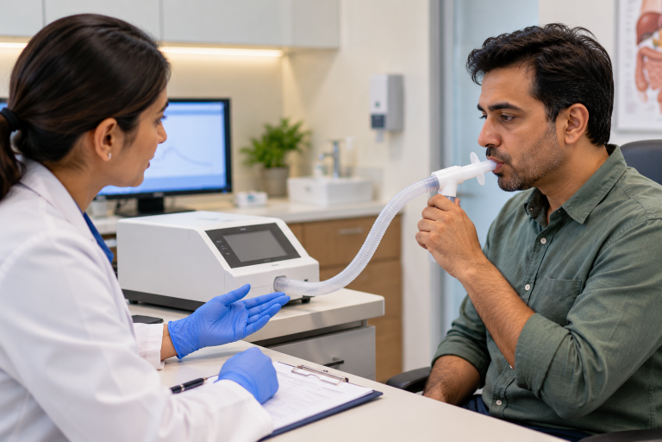
A gastrointestinal breath test is a non-invasive investigation that measures specific gases in a patient's breath after a particular test substance is consumed. Depending on the test, results may help assess carbohydrate malabsorption, lactose intolerance, fructose intolerance, or small intestinal bacterial overgrowth (SIBO).
The patient provides an initial breath sample and then consumes a prescribed test substance. Additional samples are collected at specified intervals. Changes in hydrogen or methane levels may help the clinician interpret results, depending on the test protocol.
A breath test may support a diagnosis, but it must be interpreted alongside symptoms and other findings. False-positive and false-negative results are possible, and not all patients with bloating or diarrhoea require breath testing.
Preparation may involve dietary restrictions, fasting, and specific instructions about medicines. Instructions vary by test. Patients should follow the testing centre's directions and should not discontinue prescribed medicines without advice.
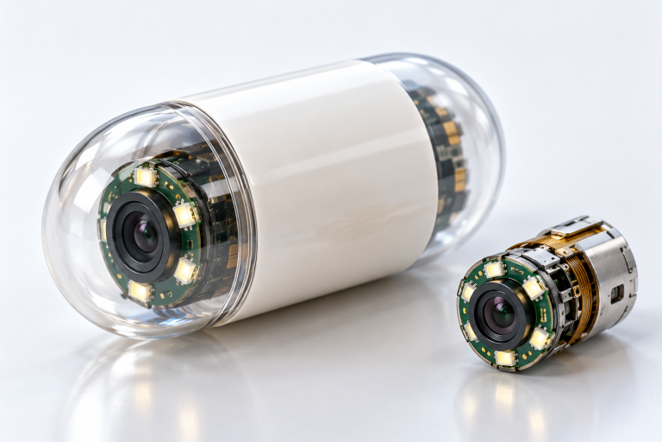
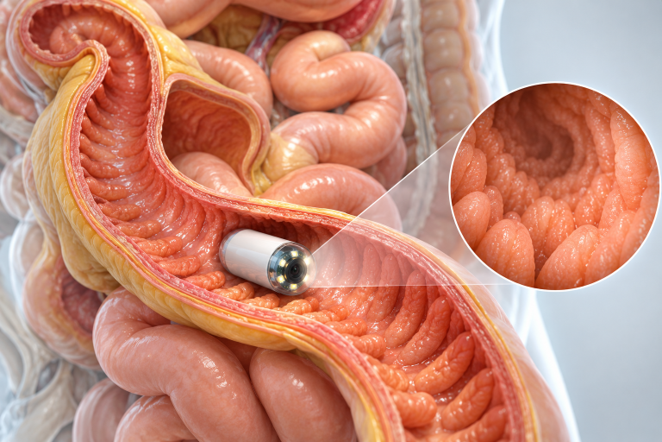
Capsule endoscopy is a diagnostic procedure in which a patient swallows a small capsule containing a camera and light source. As it travels through the digestive tract, it captures images that are transmitted to a recording device. It is particularly useful for examining parts of the small intestine that may not be adequately visualised with routine upper GI endoscopy or colonoscopy.
After following preparation instructions, the patient swallows the capsule with water. The camera takes images as it moves through the digestive tract, and the recording equipment stores them for review. The capsule usually passes naturally in the stool.
Preparation may involve fasting and dietary instructions. Patients should inform the doctor about previous bowel surgery, Crohn's disease, swallowing difficulties, or suspected intestinal narrowing. Capsule retention is a possible risk. A patency capsule or additional imaging may be recommended in selected patients.
Capsule endoscopy cannot normally take biopsies or perform treatment. If an abnormality is identified, another procedure may be needed.
If you have persistent digestive symptoms or unexplained gastrointestinal bleeding, a specialist can determine whether a breath test, capsule endoscopy, or another investigation is appropriate. Availability of specific tests should be confirmed with the clinic.
Living with cirrhosis can feel overwhelming. We provide clear information, practical guidance and ongoing support to help you move forward with confidence.
Information and advice tailored to your individual needs.
Understand your condition and the available options in simple terms.
We’re here for you—before, during and after your consultation.
A little preparation can help you get the most from your consultation.
Bring any relevant test results, scans or hospital letters.
A list of the medicines you are currently taking.
Write down any questions or concerns you would like to discuss.
Find quick answers to common questions about Breath test/ Capsule endoscopy. For anything else, we’re here to help.
No. They generally involve providing breath samples and consuming a prescribed test substance. Preparation and duration depend on the test.
No. Breath tests evaluate specific conditions. Other causes may require clinical assessment, blood tests, stool tests, imaging, or endoscopy.
No. Capsule endoscopy uses a swallowed camera, while colonoscopy uses a flexible endoscope inserted through the rectum to examine the colon.
No. A standard capsule camera cannot collect tissue samples or perform treatment.
No. Patients with suspected bowel narrowing, swallowing difficulties, or certain gastrointestinal conditions may need additional evaluation before the procedure.
Consult Dr. Varun Gupta to discuss your symptoms and the most suitable diagnostic approach. Confirm with the clinic whether the recommended tests are available directly or through referral.
Choose your preferred location and our team will confirm your appointment.
Choose your preferred date and time. The clinic team will contact you to confirm.